Gail Ose
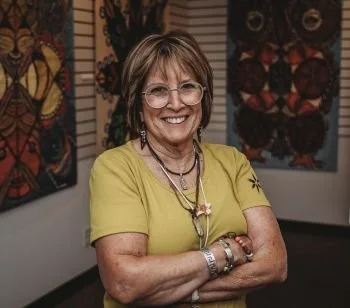
Artist Gail Ose
(218) 689-4275
gailosestudio@yahoo.com
Facebook or Instagram @Gail Ose Studio
Thief River Falls
Gail offers visual art residencies.
Gail Ose is a multidisciplinary visual artist and community arts leader based in Thief River Falls. As a Creative Frequency Coach, Art Medicine Practitioner, and founder of Serendipity Art Hub, she maintains an active studio practice, while leading a variety of art programs and workshops both in person and online.
With a background in engineering and a Master’s degree in Global Management, she combines artistic depth with organizational clarity and professional reliability. Gail is committed to expanding access to meaningful arts education in rural communities and designs residencies that build technical skill, creative confidence, and long-term engagement with the arts. She is especially drawn to symbolism and layered imagery, guiding students to discover that their stories and inner experiences can be translated into visual form with clarity and confidence.
Gail weaves her passion for creativity, spiritual connection, and the human spirit into her painting practice and throughout her life, leading others into uncharted areas of their creativity — both inward and outward — so they can live and create more authentically. She lives on a farm with her husband, LeRoy, their two Great Pyrenees dogs, Yetti and Bleu, and a couple of outdoor cats. Together, they enjoy flying airplanes, scuba diving, and exploring the magic of the world around them.
A favorite quote of hers comes from Wallace Stenger, “The brook would lose its song if we removed the rocks.”
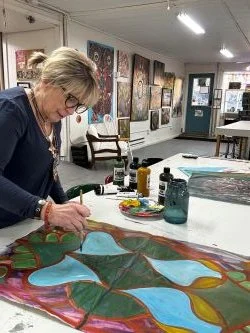
Artist Gail Ose
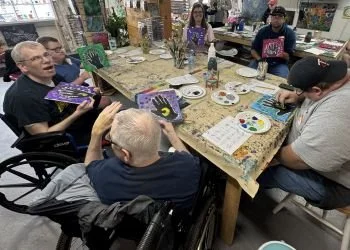
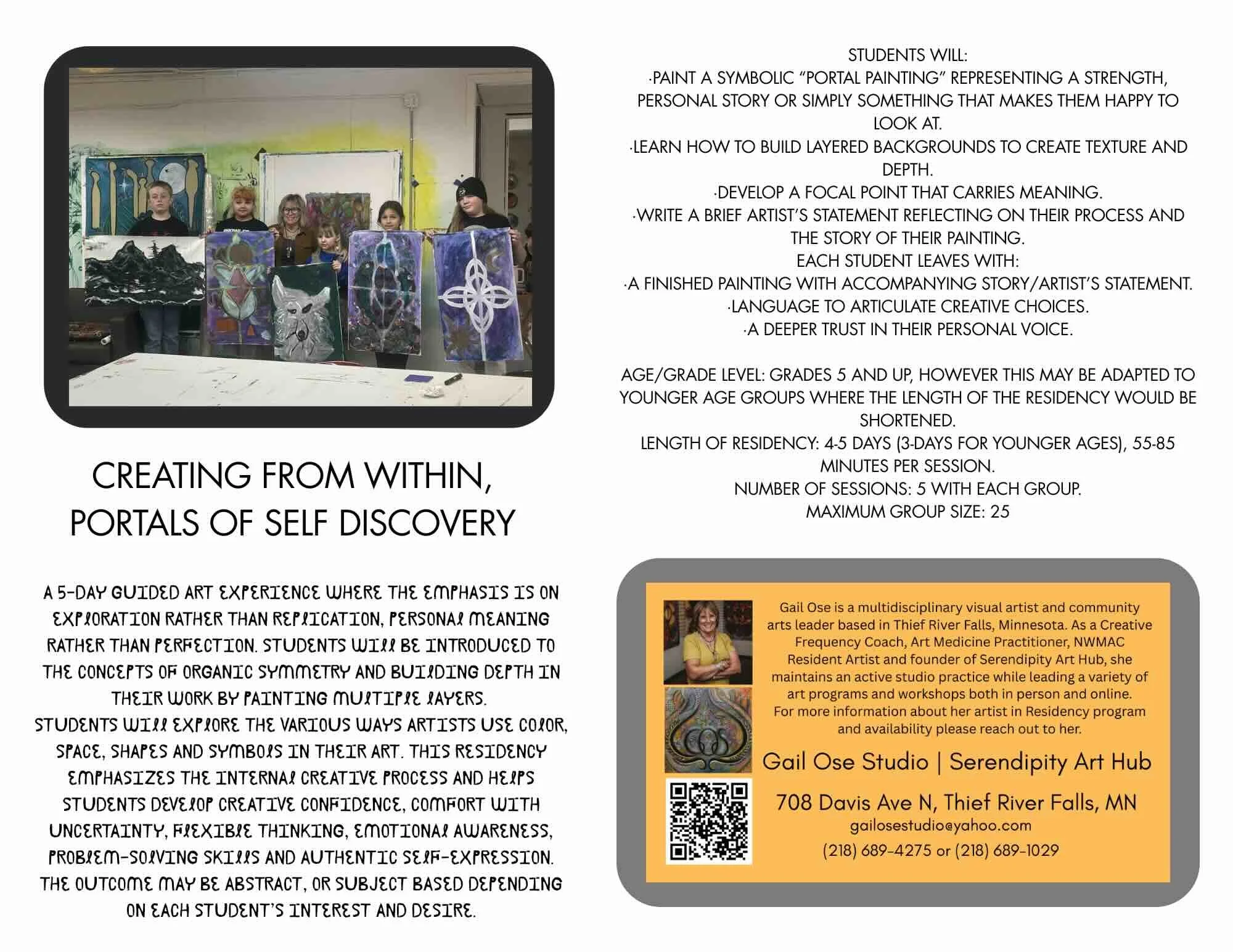
Creating from Within,
Portals of Self Discovery
Overview of Residency:
This is a 5-day guided art experience where the emphasis is on exploration rather than replication and personal meaning rather than perfection. Students will be introduced to the concepts of organic symmetry and building depth in their work by painting multiple layers.
Students will explore the various ways artists use color, space, shapes, and symbols in their art. This residency emphasizes the internal creative process and helps students develop creative confidence, comfort with uncertainty, flexible thinking, emotional awareness, problem-solving skills, and authentic self-expression.
The outcome may be abstract, or subject based depending on each student’s interest and desire.
Students will:
Paint a symbolic “portal painting” representing a strength, personal story or simply something that makes them happy to look at.
Learn how to build layered backgrounds to create texture and depth.
Develop a focal point that carries meaning.
Write a brief artist’s statement reflecting on their process and the story of their painting.
Each student will leave with:
A finished painting with accompanying story/artist’s statement.
Language to articulate creative choices.
A deeper trust in their personal voice.
Age/Grade Level: Grades 5 and up, however this may be adapted to younger age groups where the length of the residency would be shortened.
Length of Residency: 4-5 days (3-days for younger ages), 55-85 minutes per session.
Number of Sessions: 5 with each group.
Maximum Group Size: 25
Please expect to provide paraprofessionals to assist participants with special needs and ask students to wear clothing they are ok getting paint on or an apron. The paints they will be using are acrylic and do not wash out of fabric.
Content of Sessions
Session 1: “Let It Out & Get It Started” (playing with color washes, color mixing and shapes)
Students will be given a brief introduction to the course and an overview of each day’s activities as well as classroom expectations. They will watch a time lapse video of a painting being created using the multilayered portal painting technique to familiarize them with what is expected and then will be introduced to what is a color wash.
They will be given a 20” x 33” piece of flat rolled canvas, two larger paint brushes and markers or pens.
Step 1: Loosen up and get the jitters out by drawing words, shapes or symbols on their canvas with a marker. Whatever comes to their mind. Students will be asked to draw big, filling the canvas and drawing every which way. This should be fun and playful.
Step 2: Select 2-4 colors of paint to add a wash of color to their canvas by simply playing with color. This will be messy and possibly drippy.
Step 3: Add random shapes and patterns on top of the color wash. Students may use the same paint or get additional colors. They will be encouraged to add white or yellow to change the original colors they chose. This will encourage experimenting with color mixing.
At the end of the session students will be expected to clean and return their brushes and tidy up their space. They will be given a handout with a sample of how they will be painting in their next session.
Subtle Life Skills: It’s okay to start messy and not have a plan, overcoming resistance and fear, creativity can be fun, emotional release through art making.
Session 2: “Say hello to your inner voice and imagination” (Introducing form through organic symmetry)
Students will be given white paper, pencils, paint brushes and pick up their canvases they started on day 1. They will receive a brief overview of what they did on the previous day and what the current day will cover. They will watch a short demonstration video introducing them to the concept of organic symmetry and then practice with this concept on paper for 10-12 minutes. They will then go get 2-4 colors of paint and begin adding form to their painting as instructed.
Step 1: Make a grid on their canvas.
Step 2: Make a portal shape around the center of the grid. This may be any shape they wish. There is no right or wrong shape to paint.
Step 3: Begin adding organic symmetry to their canvas by painting lines on their canvas using whichever color they choose. They may choose to use the pattern they practiced with on paper, or they may choose to do something totally different.
Step 4: As time permits, begin filling in the open shapes on their canvas with color. Students get to choose filling in shapes with solid/opaque colors, color washes, or a combination of both.
At the end of the session students will be expected to clean and return their brushes and tidy up their space. They will be given a handout on symbols, what they are and how many cultures tell stories using symbols.
Subtle Life Skills: Exploring the mystery, navigating the unknown, giving shape to new ideas, moving forward without having the end in sight, overcoming resistance and fear, listening to and communicating with your inner voice, intuitive decision making.
Session 3: “Bring It to Life” (Adding color and refining form)
Today is all about getting into the flow.
Students will receive a brief overview of what they did on the previous days and what the current day will cover. They will pick up the canvases they were working on and select brushes and paints. Students practice moving forward without overthinking and embracing imperfection.
Step 1: Finish filling in the open shapes on their canvas with color. They will be asked to decide if they want to keep all the lines they painted, if they want to paint over any, or if they want to add new lines. They will be encouraged to paint fast without overthinking. This will take up most of their time. As they paint, they will be invited to bring any shapes from the previous layer back into view if they wish to.
Step 2: Time permitting, begin adding detail to their paintings.
At the end of the session students will be expected to clean and return their brushes and tidy up their space. There is no handout for today.
Life Skills: “Sometimes your painting, as in life, changes—and you get to decide what stays.”
Intuitive decision making, setting the foundation, flexibility, it’s ok to change your plans, recommitting after change, focusing, tuning out distractions, going with the flow, listening to and communicating with your inner voice.
Session 4: “Add a little bit of magic” (Symbol integration and focal point refinement)
Today is about developing their painting/visual story by adding symbols, details and meaningful elements using the handout they received on day 2.
Students will receive a brief overview of what they did on the previous days and what the current day will cover. They will have a brief review of the handout on symbols. They will watch another short video of how AI can be used to help guide refining a painting. They will pick up the canvases they were working on and select brushes and paints.
Step 1: Begin/continue adding symbols, details and meaningful elements to their paintings as they bring things to completion.
At the end of the session students will be expected to clean and return their brushes and tidy up their space. By now they should be nearing completion of their painting or at least have the end in sight. Students will be given a handout listing some of the questions they will be asked to write about in their last session and a sample of an artist’s statement.
Life Skills: Recognizing their brilliance, following through even when the way ahead isn’t clear.
Session 5: “Bring it to completion” (Refine their painting and reflect on their experience)
Students will be given a brief overview of what the last day will cover. They will pick up the canvases they were working on and select brushes and paints. They will be given 20 minutes to finish their paintings then be asked to clean and return their brushes.
They will be given another 30 minutes to reflect, share and/or write about their experience. They will be asked to neatly fill out a short form including their name, title of their painting, description of their experience and the meaning behind their painting from an artist’s perspective to be displayed with their painting somewhere in the school or at a public showing of their work. They will be asked to share one nice thing about someone else’s painting.
At the end of the session students will be expected to tidy up their space. A group photo will be taken before dispersing.
Life Skills: My voice matters, all voices matter, recognizing their own talent, recognizing the talent of others, completion, meaning, and personal expression.
Materials Needed
(items in bold with an asterisk are to be supplied by the school or organization):
Flat rolled canvas or cardboard measuring 20” x 32”
Flat rolled canvas or cardboard measuring 10” square for practicing on, dumping extra paint from their brush on and for doodling on if they have extra time.
Acrylic paint basic colors (student grade is fine)
Foam plates (a minimum of 2 for each student)
2 large paintbrushes (the inexpensive kind often found at a hardware store)
Detail paint brushes
Sponge brushes
Ruler or other gridline painting device
Water containers
Paper towels or rags
Pencils
White paper for practicing concepts on
Chalk for helping with translating images on their canvas
Black permanent marker or paint pen (for line work and first layer)
Optional: white gel pen (for highlights)
Hair dryers (for drying between layers as needed)
Screen or television for showing videos on and demonstrating steps*
Table coverings* (plastic or butcher paper)
Aprons or paint shirts*
End Product: a completed symbolic painting measuring 20” x 32” with an accompanying artist statement and, time permitting, a second smaller 10" x 10" painting made as a byproduct of cleaning their brushes on and practicing on. Reference samples of both sizes of paintings will be on display for them to look at.
Displaying Student Work: Student projects done during this residency will be displayed in school and/or a display will be made available to the public during a school event. These projects could also be displayed at a county fair.
For questions or to request changes to this proposed schedule, please contact