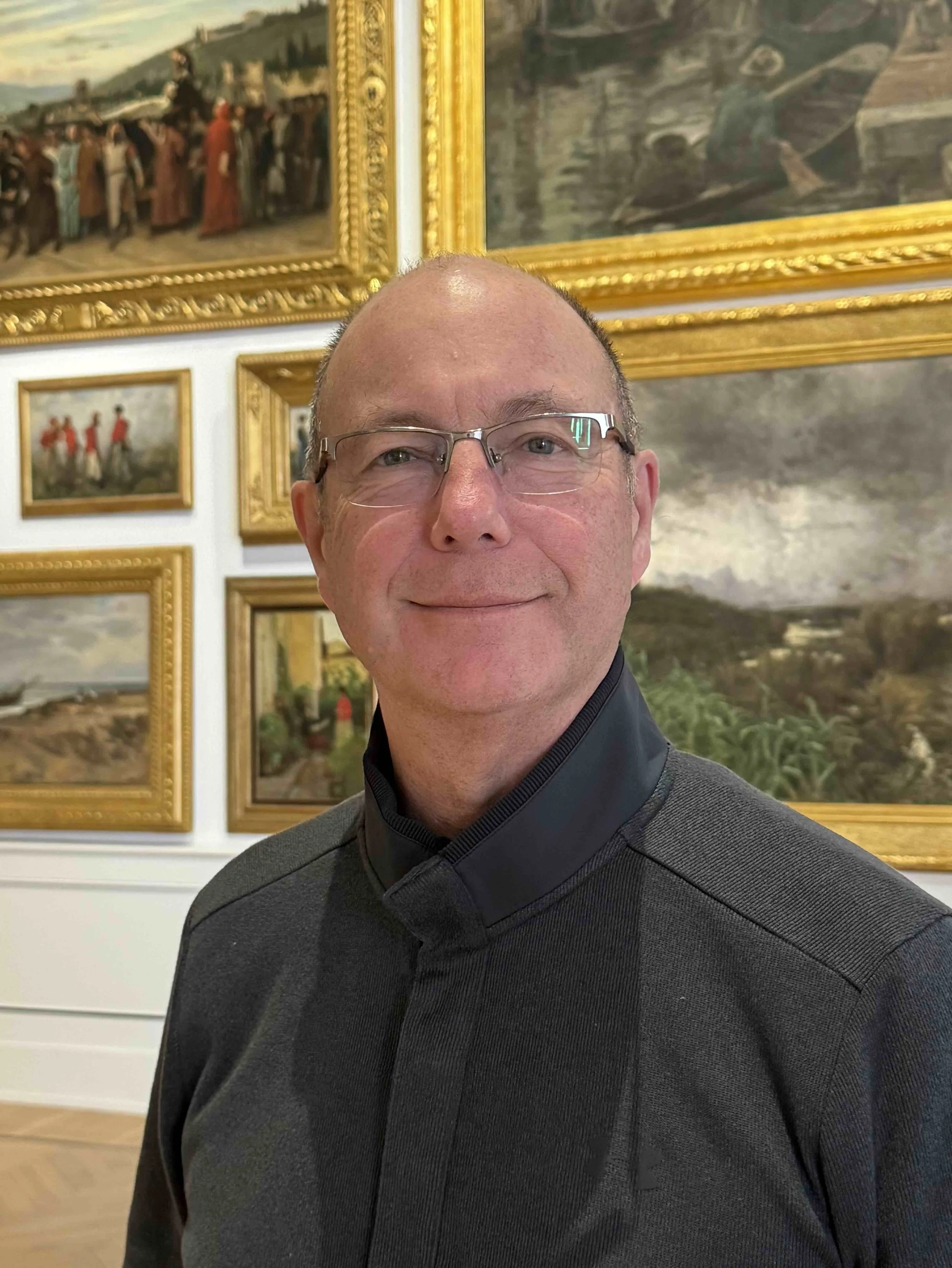
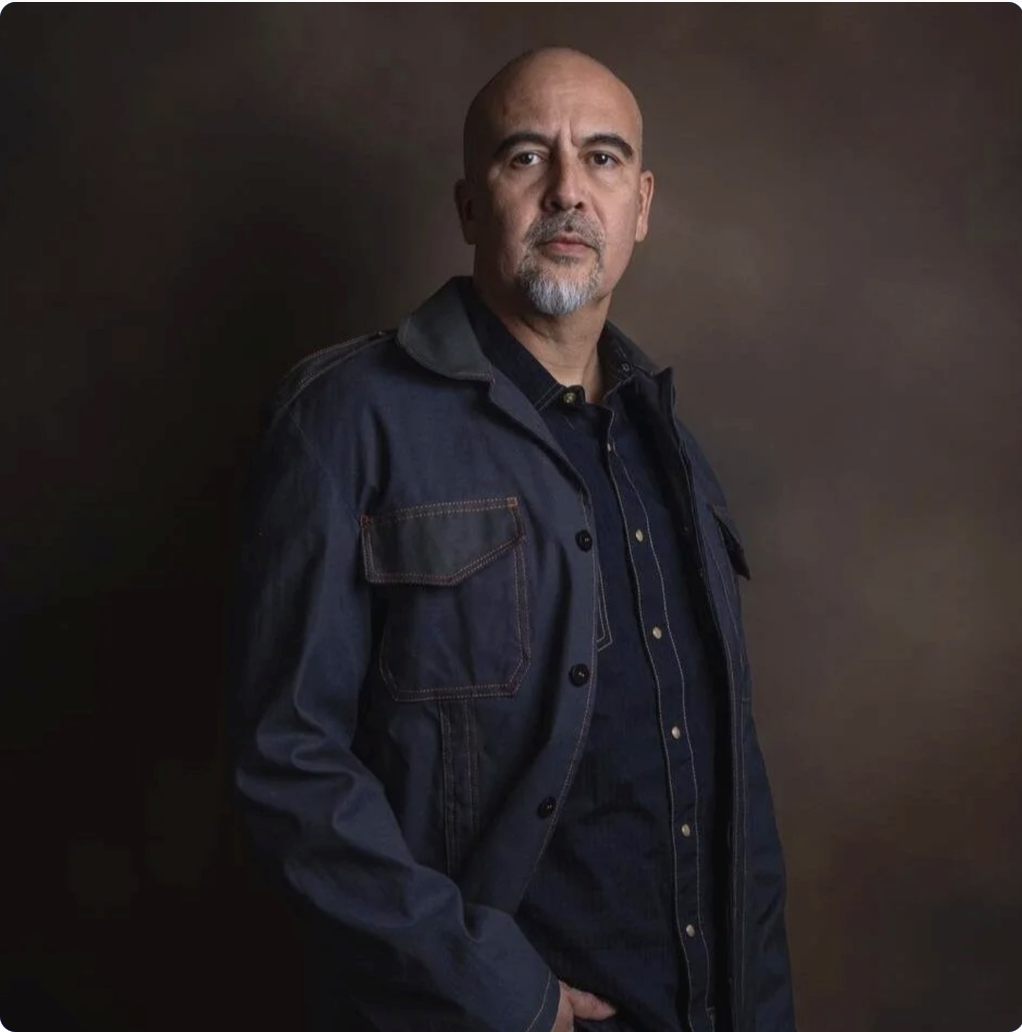
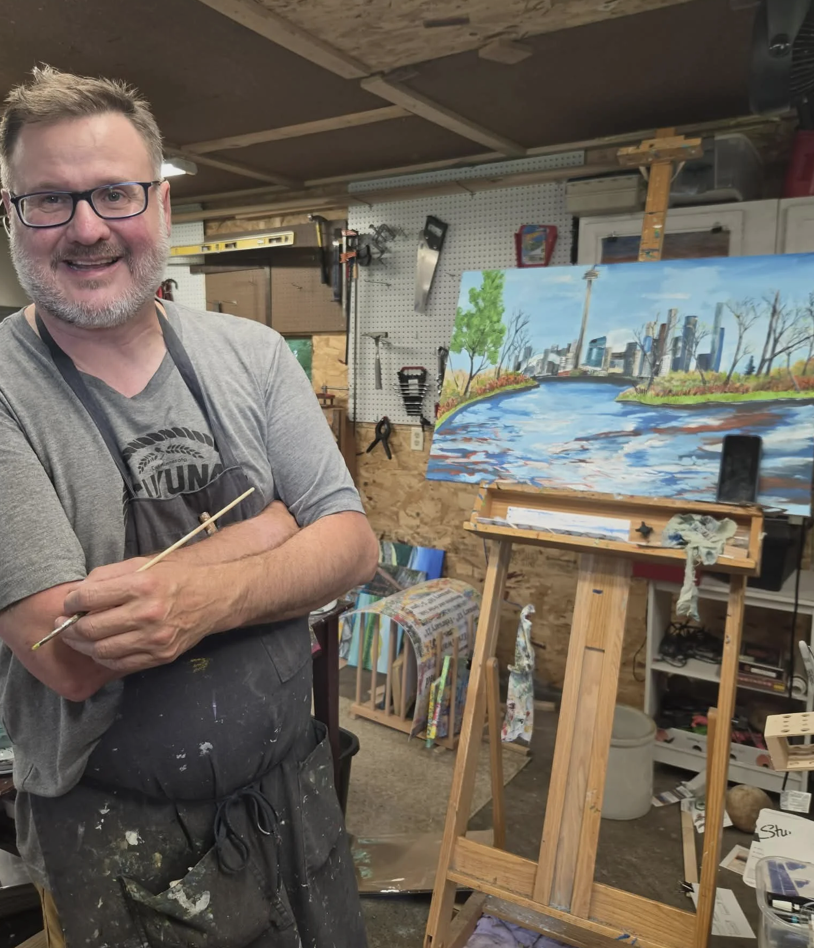
Artist Eric Twait has an exhibit at Warroad RiverPlace that is open through October with 45-46 pieces of his work. Born from grief, shaped by words, and painted into silence — Letters to the Void traces an artist’s journey through loss, what could not be said, and the slow discovery of a way forward.
Eric explained, “I've been making art since I was four. As an adult I settled on landscapes, mostly, wide open spaces. Three years ago, losing my wife to cancer closed all of that down. When I came back to the studio, what came out wasn't landscape anymore. It was words — things I couldn't say, letters that would never be sent, written and rotated and painted over until they nearly disappeared into color and texture. That's how Letters to the Void began.
It didn't stay there. What started as private letters became a way of working — I hold a sentence in my head while I paint it, like a mantra, with my brush. Somewhere along the way I realized this wasn't just about grief, it became my path forward. Now I use it on whatever's going on in my life — self-doubt about the work itself, an old farmhouse full of uninvited guests, the particular ache of being an optimist who doesn't always get what he hoped for. Each canvas holds one of those and argues with itself: chaos against order, private against public. A background settles over the top last, like weather, and the words disappear underneath, mostly unreadable. What's left is the form — color, texture, composition — a surface where the feeling can stay without needing to be explained. One piece in this show, “Words Are an Elixir,” is about that directly: not what the words say, but what the saying of them does. You can read the letters if you want, or you can try anyway. But it's more about the act of creating than the letters themselves.”
Eric will also be teaching a workshop on Saturday, October 17. The workshop, Painting Your Emotions with Eric Twait is open to beginners. Born from one artist's journey through love and loss, this workshop invites participants to explore what is waiting to be expressed within. Through thoughtful prompts and an intuitive painting process, participants will create from the truth of your present moment, painting what you feel rather than what you see. No painting experience is necessary for this class. Later that day is an Artist Reception from 3-5 PM. Everyone is welcome to attend. Meet the artist, enjoy light refreshments, and stay for the dinner theater comedy, Escanaba in da Moonlight, presented by Warroad Summer Theatre.
Exhibit info: https://www.warroadriverplace.org/events/letters-to-the-void
Find Eric at his website at erictwait.com or on Facebook @ Eric Twait Artist
Listen to the interview to learn more.