Jessica Ross
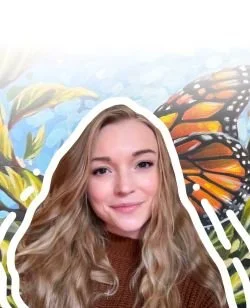
Jessica Ross
218-275-3188
jessielynnart22@gmail.com
Facebook @Jessie Lynn Art, Instagram @jessielynn_art
Jessica lives in Fisher and offers a visual art with ecology residency.
Jessica Ross is a multimedia artist who specializes in acrylic painting, colored pencil, digital design, and wood working. She grew up on a farm where she spent most of her time in the woods and fields. Her love of art and nature carried her to Duluth where she received her BA in Art and Biology. After college, she became an assistant preschool teacher at a Head Start program in Thief River Falls. There she learned about the importance of open ended art and play-based learning.
Located in Fisher, Jessica teaches 5th- 8th graders at the Northwest Service Coop’s Young Author’s Conference in Thief River Falls and their Creativity Festival in Bemidji. She has also taught adult and children’s painting classes at the Queen City Art Center in Crookston.
Jessica is working on her secondary education degree at the University of North Dakota and has experience creating lesson plans. She has developed an understanding of diverse teaching practices and student needs through observing and substitute teaching in the East Grand Forks Schools. Jessica seeks to make a life long learner out of the students she teaches and inspire teachers to incorporate art into their lessons by being a bridge for art and other disciplines, specifically science. She believes that art is a necessity to life and learning even though it may seem intimidating.
Jessica enjoys teaching all ages because she believes that everyone benefits from nurturing their creative inner child no matter how old they are. Growing confidence and instilling a sense of joy through art is at the heart of Jessica’s philosophy for her body of work and her lessons.
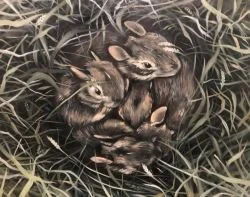
The Meek an original painting by Jessica Ross
Jessica’s personal work has always been inspired by the natural world around her. Her work highlights little living things in local fields, gardens, and aquatic habitats. She likes to do intuitive painting, solving color and compositional problems on her canvases as she is painting. Jessica collaborates with Stephanie Jorgenson, a second grade teacher and writer from Henning illustrating children’s book series “Dally the Distracted Cattle Dog.” Together they have published 5 children’s books. Jessica is available for commissioned colored pencil memorial pet portraits. She also sells prints and original pieces of her work through her website and facebook page.
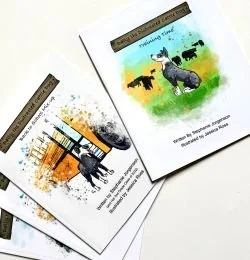
Jessica Ross’s books Dally the Distracted Cattle Dog
“I love the quote, ‘I’ve been absolutely terrified every moment of my life and I’ve never let it keep me from doing a single thing that I wanted to do’ by Georgia O’Keeffe. That is the kind of resilience that my art and my faith has given me and my goal is to inspire that in everyone that I possibly can. ”
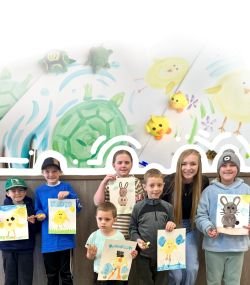
Jessica Ross in the classroom
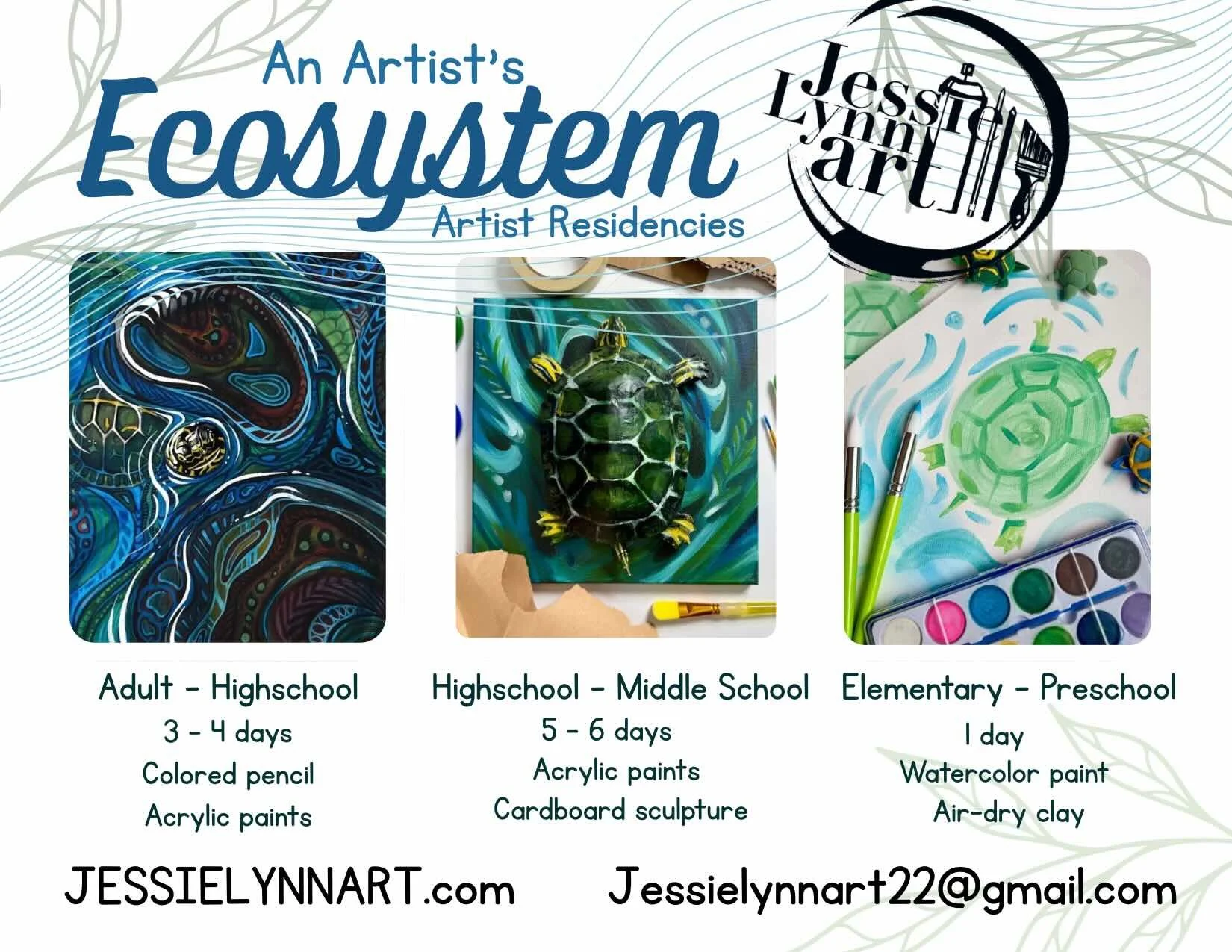
An Artist’s Ecosystem
This offering can be adapted for different age groups and is a weeklong course
This course guides students to study aquatic ecosystems through creating 2D paintings and 3D models. Students will learn artistic techniques with acrylic paint and cardboard sculpture to create fish, turtles and other aquatic organisms. This course is designed to boost visual thinking skills and creative problem solving as well as aid in making connections by bridging two disciplines: ecology and art.
Ages: 10-15 Can be modified to accommodate different age groups
Length: 5-6 days
Time per session: 45-55 minutes
Student limit: 20
Sessions
Day 1: Students will be introduced to the planned activities and clean up routines. Then students will be introduced to aquatic ecosystems and how art is used in studying nature. Students will be given access to a collection of illustrative books on aquatic organisms to find an organism they would like to focus on.
Students will take notes on their organism. Some questions that will be researched include; Where does the organism live? What makes it interesting to you? What colors would you use to paint it? What does the organism need in its environment?
Students will create thumbnail sketches of their organism from different perspectives and its surroundings. Students will identify the shapes that they will need to form the organism of their choosing.
Day 2: Students will see examples of the instructor’s work and get instruction on acrylic painting techniques and brush strokes that create motion.
Students will paint collaboratively in small table groups on a set of canvases put together. This will be the “ecosystem” for the organisms.
Each student will be assigned a canvas from the group painting to use as the base for an organism. They will add details found in the informational books that pertain to their organism.
Day 3: Students will get instruction on different techniques used to join cardboard together.
Students will draw out the shapes they need to create their organism on cardboard and cut them out.
Students will begin to join cardboard pieces together using masking tape.
Day 4: Students will continue work on their organism and assemble their forms.
Students will get instruction on paper mache using packaging paper and then use that technique to cover their organisms.
Day 5: There will be a short discussion on color in nature and an overview of how to layer acrylic paint in a formal style used by the instructor.
Students will decide on what colors to use for their organism and put their palette together.
Students will spend the class painting their organism.
Students may also want to add more details to their canvas during this session.
Day 6: Students will reflect on their piece and organism by writing the main points that they learned in this session. “What did you learn about the ecosystem, organism, or art making process?”
Students will attach their organisms to their canvases using wire.
Students will put all of their pieces together to see how the organisms interact with each other visually. When the pieces are showcased together the background of the canvases will show a cohesive “environment”.
Students will share what they learned about the ecosystem, their organism, and art.
The instructor will work with the school to exhibit student work and notify the parents and community of the display.
Example project materials:
Sketch Paper
Pencils
Scissors
Cardboard
Packing paper
Painter’s tape
Glue
Acrylic paint
Paint brushes
Paper plates
Cups
Water
Papertowels
Wire
Accommodations Available: Precut shapes and visual steps to build a turtle or fish.
Paras will be asked to assist students with IEPs or 504 plans.
Other residencies and 1 hour lessons available, contact artist for details.