Megan Maloney

Megan Maloney
218-689-3947
Thief River Falls
Megan offers a STEAM-focused collaborative design and technical theater residency
Megan Maloney is a multi-disciplinary artist and creative leader who views art as more than a profession; she sees it as a vital necessity for the soul. Raised in rural communities of Northern Minnesota, her journey into the arts began at age 15 within the theater program at Northland Community and Technical College. This early foundation sparked a lifelong passion for storytelling that led her to earn a Bachelor of Fine Arts in Film and Digital Media from the Savannah College of Art and Design (SCAD). Whether she is directing a production, designing an immersive set, or creative problem-solving her next big idea, Megan’s work is driven by a desire to connect the dots between technical precision and emotional resonance.
As a teaching artist, Megan fosters meaningful collaboration by treating her students like a professional production crew. This approach demystifies the artistic process, showing the next generation of creators that a successful show requires both a bold vision and the technical discipline to execute it. Through residencies like The Scenic Handoff, she remains dedicated to expanding arts access in rural communities, ensuring students have the tools and confidence to turn a weird idea into a vibrant reality.
With over 20 years of experience, Megan has navigated the high-energy creative industries in Atlanta and Los Angeles, as well as the community-driven arts scene in our region. Her professional path includes nearly a decade at DigiKey, where she led cross-functional creative teams and mastered the art of digital engagement for a global audience. Today, as the Executive Artistic Director for the Thief River Falls Area Community Theater (TRFACT), she draws on this diverse background to build inclusive environments where every performer — from workshop students to seasoned performers — feels empowered to find their creative voice.
Megan’s artistic practice is a mash-up of mediums, ranging from directing and set design to voice recording, watercolor painting, and film photography. She is particularly inspired by the "behind-the-scenes" mechanics of production, often incorporating technical skills from her film and design background into live theater to create unique, visually dynamic experiences. She specializes in taking complex concepts and translating them into reality, overseeing the full lifecycle of a production from initial vision to final execution. For Megan, the "magic" of a show isn't just what happens under the spotlights; it is the collaborative problem-solving and craftsmanship that takes place months before the curtain rises.
Artist Megan Maloney
“I’ve led creative teams in the corporate world, and the lesson is always the same: the coolest things start as a ‘weird’ idea. I want my students to know that their unique vision is exactly what the professional industry is looking for. My job isn’t to make them perfect; it’s to hand them the tools and the confidence to turn a quiet idea into a vibrant reality.”
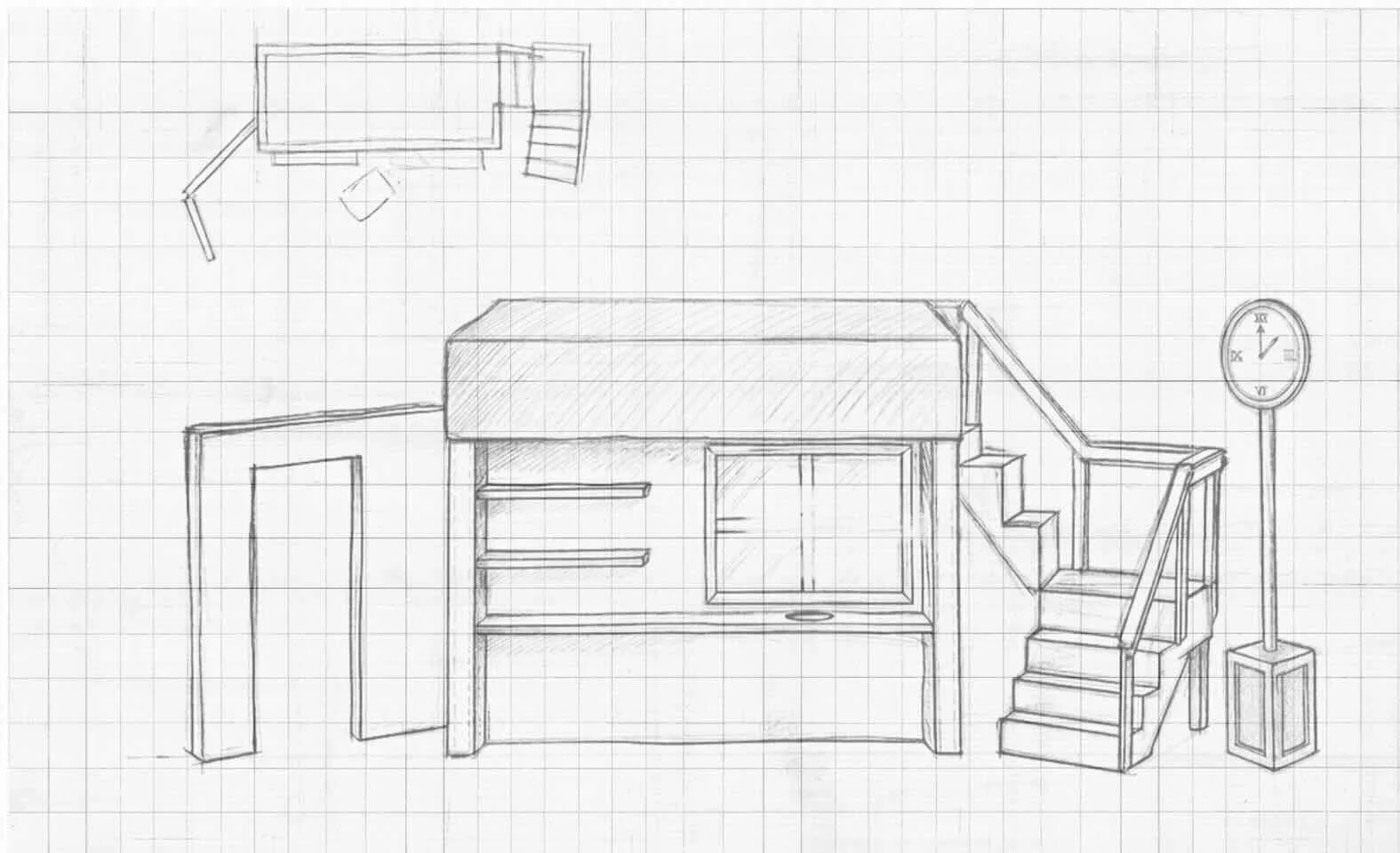

The final stage reality: From the 2025 production of Little Shop of Horrors for the Thief River Falls Area Community Theater, utilizing this design process.
The Scenic Handoff
Residency Type: Collaborative Design & Technical Theater (STEAM)
Age/Grade Level: Grades 6 to Adult
Length of Residency: 5 days, 2-hour sessions
Maximum Group Size: 15
Overview of Residency
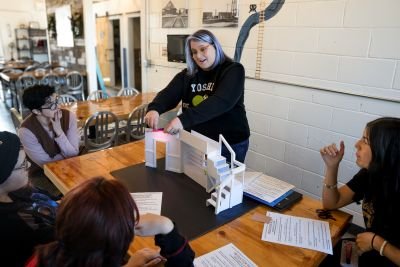
Students will explore the intersection of storytelling and technical theater through a collaborative design challenge. This residency is a STEAM-intensive "production sprint" where students rotate through every stage of the process: Concept, Build, Decoration, and Lighting. By treating students like a professional design crew, Maloney demystifies the artistic process and proves that technical precision is the foundation of creative reality.
Session 1: The Visionary (The Creative Brief) — The residency begins with a "Blind Draw" where each student selects a popular show title. Acting as the Lead Designer, students utilize digital research tools to define the architectural era and aesthetic of their show. They develop a professional Creative Brief featuring a written "Logline," a 1:12 scale floor plan sketch, and a visual palette or mood board. This packet serves as the technical "hand-off" for the next phase of production.
Session 2: The Builder (Engineering & Applied Geometry) — Sets are rotated and students receive a classmate's Creative Brief. Their task is to interpret 2D sketches into the structural "bones" of a set piece. Using the 1-inch grid method, students practice Ratio and Proportion (1:12 scale) to ensure architectural stability and accuracy in a 3D structural model.
Session 3: The Decorator (Scenic Artistry & Grit) — Projects move again to a third participant. The Decorator adds the "set dressing" and lived-in details. Using paint, fabric scraps, and recycled materials, they interpret the original logline by adding textures like "rusty metal," "aged wood," or "overgrown vines" to make the piece feel real and inhabited.
Session 4: The Tech (Atmospheric Lighting) — In the final rotation, students act as Lighting Designers. The session begins with a Lighting Mood Draw (e.g., "Storm Coming" or "Golden Hour"). Using mini-LED lights and colored gels, they "paint" the set in light and color. The focus is on Optical Physics—learning how to use shadows and subtractive color to create depth. The session concludes with a "Hero Shot" photograph of the fully lit design.
Session 5: The Gallery (The Production Post-Mortem) — The "Visionary" from Day 1 is reunited with their completed set. The residency concludes with a professional-style "Wrap Party" and critique. Students discuss the "hand-off" process, exploring how the collaborative "mash-up" of different artistic voices transformed a single idea into a finished piece of stagecraft.
Materials Needed
The "Stage" 15 uniform tag board or cardboard Stage Bases (platforms).
Research Tools iPads, Chromebooks, or digital access for visual research.
Building Supplies Foam core, tag board, corrugated cardboard, scissors, X-Acto knives (age dependent), cardboard cutting tools, metal safety rulers, and architect scales.
Adhesives Low-temp hot glue guns, wood glue, and masking tape.
The "Grit" Bin Color sets, acrylic paints, sponges, brushes, and assorted fabric/recycled scraps.
The Tech Kit Battery-operated mini LED lights and a variety of lighting gels.
End Product
A fully lit, 3D mini-set and a high-quality digital photograph of the final design. Each student leaves with a Production Packet documenting the collaborative journey from an initial concept to a professional, high-fidelity reality.